The Challenge
The client was struggling with a fragmented operational framework.
2 separate departments used 2 independent systems to configure manufacturing Operation Rules, which were then fed into the central EQS system to run production equipment.
This duplication caused significant management overhead and operational risk.
There was no unified view to track all rules, prevent conflicts, or ensure consistency.
Therefore, rule errors remained undetected until they caused failures in the EQS, leading to unplanned downtime and production disruptions.
To regain control and ensure operational stability, the company needed a solution that could unify its fragmented systems into a single, authoritative source of truth.
The Solution
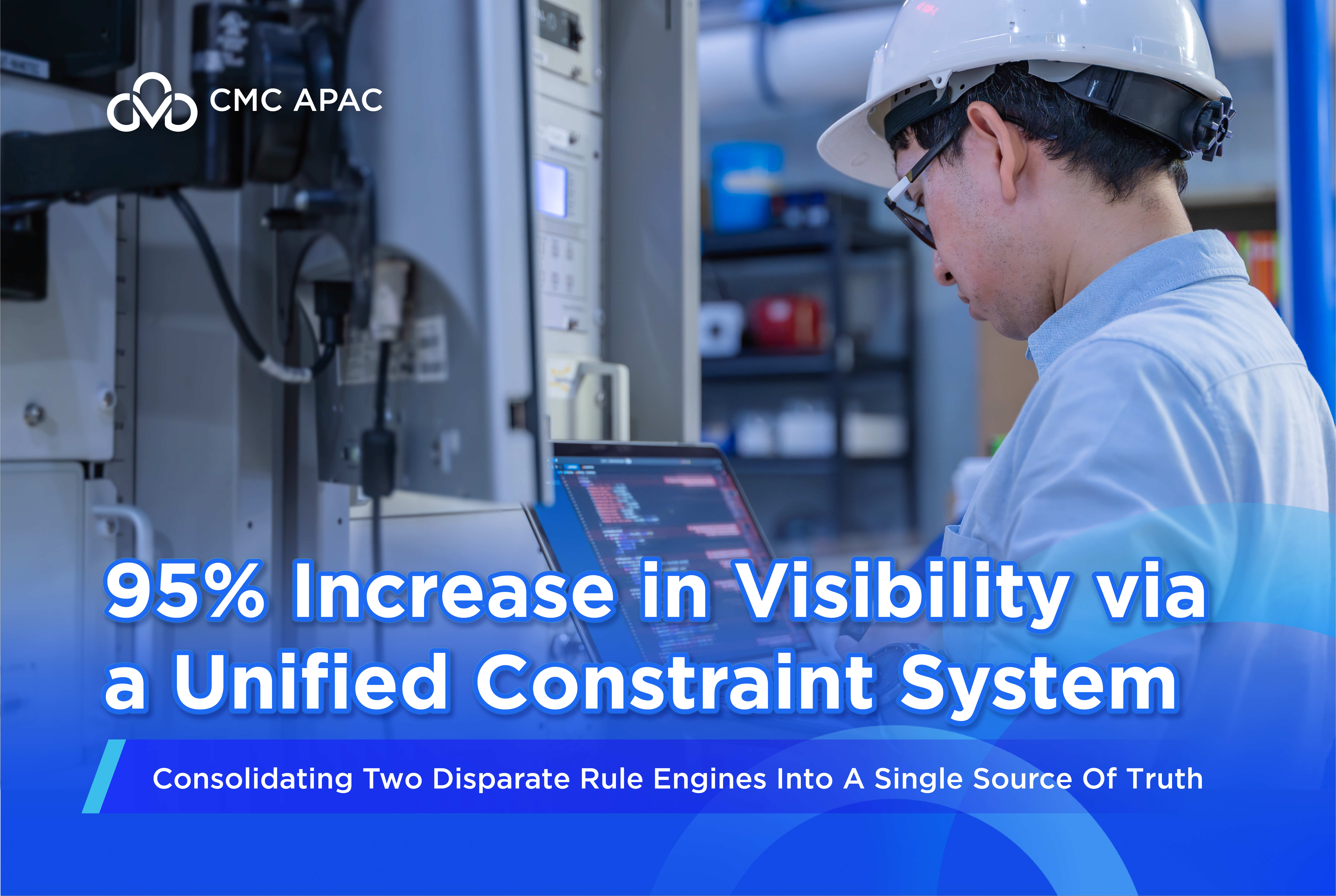
We designed and delivered a unified Constraint System (CS) to consolidate the two disparate rule engines.
Key features included:
– Comprehensive Analysis & Unification Strategy
+ Collected and analyzed all input information from both existing systems.
+ Mapped common and unique business requirements to design a single, integrated solution.
– Development of the unified CS
+ Established a central platform for full lifecycle management of all Operation Rules.
+ Core functionalities enabled users to:
~ Create, Read, Update, and Delete (CRUD) Integrated Seasoning Constraints.
~ CRUD Disallowed Back-to-Back Recipe rules.
~ CRUD Tool Group configurations.
– Seamless Real-Time Integration
+ Engineered a reliable connection to the EQS system using TibcoRV.
+ The system automatically receives EQS messages, checks them against active constraint rules, and returns decisions in real-time.
– Proactive Monitoring & Alerting
+ Implemented automated email notifications for key system activities.
+ Introduced critical alerting for immediate operator intervention in cases of:
~ Rule conflicts.
~ System operational errors.
The Outcome
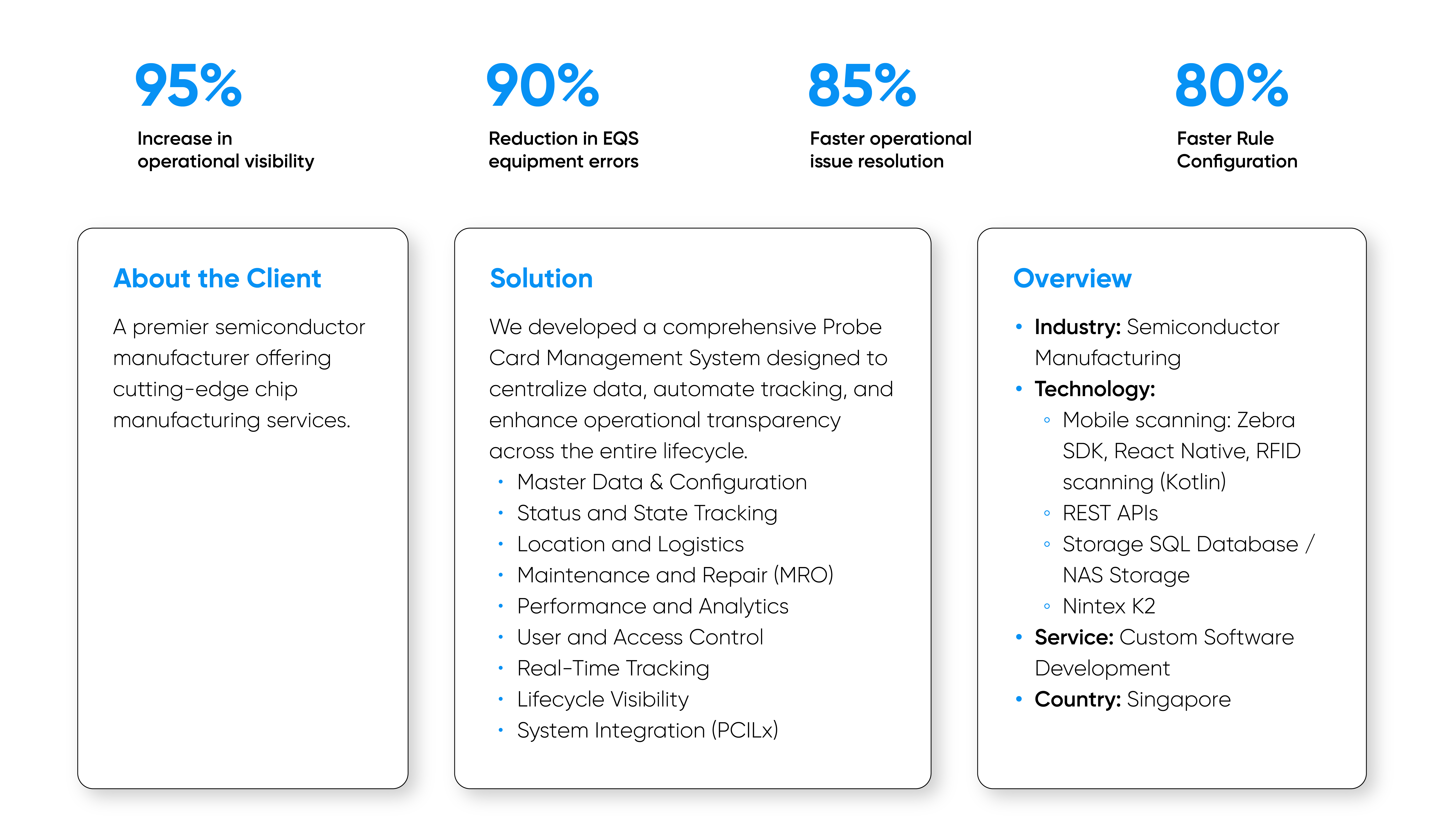
- 95% Increase in operational visibility
- 90% Reduction in EQS equipment errors
- 85% Faster operational issue resolution
- 80% Faster Rule Configuration