Legacy systems rarely fail at once; they become harder to change, integrate, and secure as business needs evolve. Legacy system modernization with AI can speed discovery, dependency mapping, refactoring, and testing while keeping engineering review in place.
The harder decision is choosing how deeply each workload should change. This article explains six modernization paths, where AI creates value, and how to move workloads through five controlled steps.
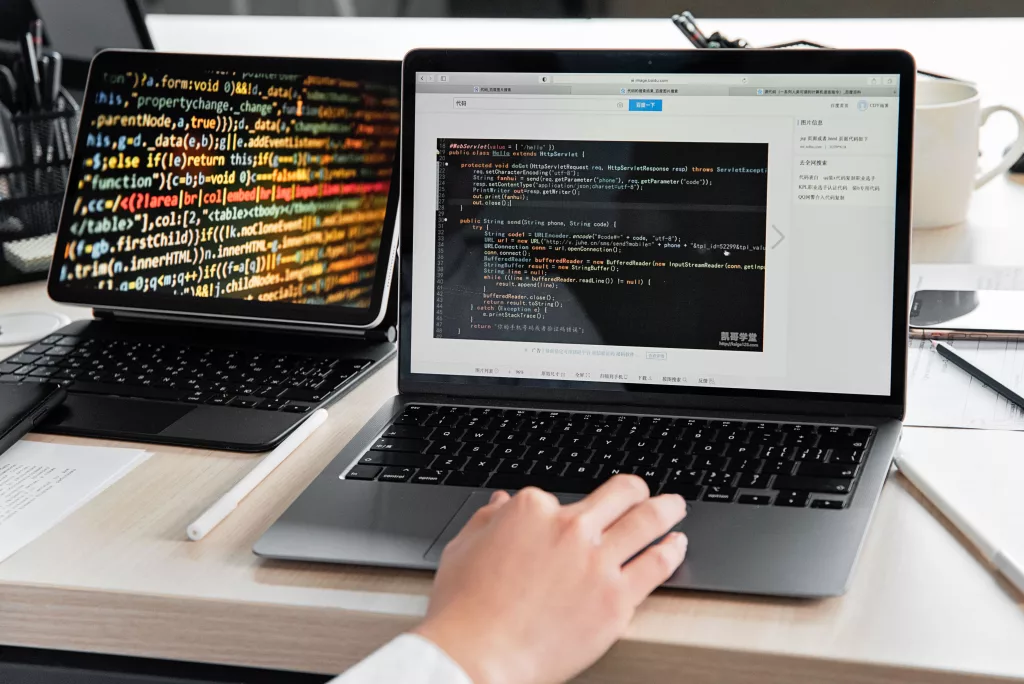
Legacy system modernization with AI code assessment
What Legacy System Modernization with AI Changes
AI creates the most value when it improves application understanding before engineers change production systems.
It can summarize unfamiliar code, identify repeated patterns, map likely dependencies, create documentation, and generate test cases. AI-powered code refactoring can also suggest targeted changes to existing code.
The value goes beyond faster coding. McKinsey reports that properly applied generative AI can accelerate technology modernization timelines by 40–50% and reduce technology-debt costs by 40%.
Source: McKinsey — AI for IT modernization: faster, cheaper, and better
AI does not remove engineering accountability. Teams still need to validate business rules, security requirements, integrations, and generated code before release.
Choose the Right 6R Path Before You Migrate
A cloud program should begin with a workload decision, not a migration tool. Application health, future value, technical constraints, and acceptable risk determine the right path.
| Path | Choose it when | Business value |
| Rehost | The application works, but its infrastructure needs to move. | Leaves proven application logic largely unchanged while moving away from aging infrastructure. |
| Replatform | Limited changes can improve cloud efficiency. | Captures cloud benefits without the effort and risk of a major redesign. |
| Refactor | The current design limits performance or maintainability. | Improves maintainability, performance, and release flexibility. |
| Rebuild | Business value is high, but the design is fundamentally outdated. | Removes old constraints and supports current business requirements. |
| Retain | Migration value does not justify the risk. | Avoids unnecessary disruption and preserves investment for higher-priority workloads. |
| Retire | Functionality is redundant or no longer required. | Removes maintenance, licensing, security, and dependency overhead. |
The 6R decision prevents teams from applying the deepest form of modernization to every application.
AI can strengthen that decision by exposing dependencies, duplicated logic, and weak test coverage. Legacy system modernization with AI works best when this technical evidence supports business judgment rather than replacing it.

AI-powered code refactoring for legacy applications
A 5-Step Process for Legacy System Modernization with AI
A controlled program connects application value, technical evidence, migration choices, and measurable outcomes.
Step 1: Assess value and dependencies
Rank applications by business importance, maintenance burden, technical debt, and future demand.
Map databases, APIs, interfaces, batch processes, and connected systems. AI can accelerate documentation, but engineers and application owners should validate the resulting dependency map.
Step 2: Apply AI-powered code refactoring selectively
Use AI-powered code refactoring where teams understand the application and can verify generated changes.
AI can explain code, detect duplication, suggest cleaner structures, and generate tests. McKinsey estimates that generative AI can make code refactoring 20–30% faster.
Critical business logic still requires code review, automated testing, and security scanning.
Step 3: Match the target state to the 6R choice
Do not force every workload toward microservices or a complete rebuild.
A rehosted application needs different controls from a refactored application. Define data protection, observability, recovery, integrations, and DevSecOps requirements around the selected path.
CMC APAC’s Cloud Enablement Services cover cloud migration and cloud modernization when implementation support is required.
Step 4: Move mainframe workloads in controlled waves
For a mainframe to cloud AI program, AI can support code interpretation, business-rule extraction, dependency analysis, documentation, and test generation.
Avoid treating the mainframe as one migration unit. Move selected workloads first, then validate integrations, security, data flows, and performance.
A phased approach limits the blast radius of unexpected dependencies. It also gives leaders evidence before they approve the next migration wave.
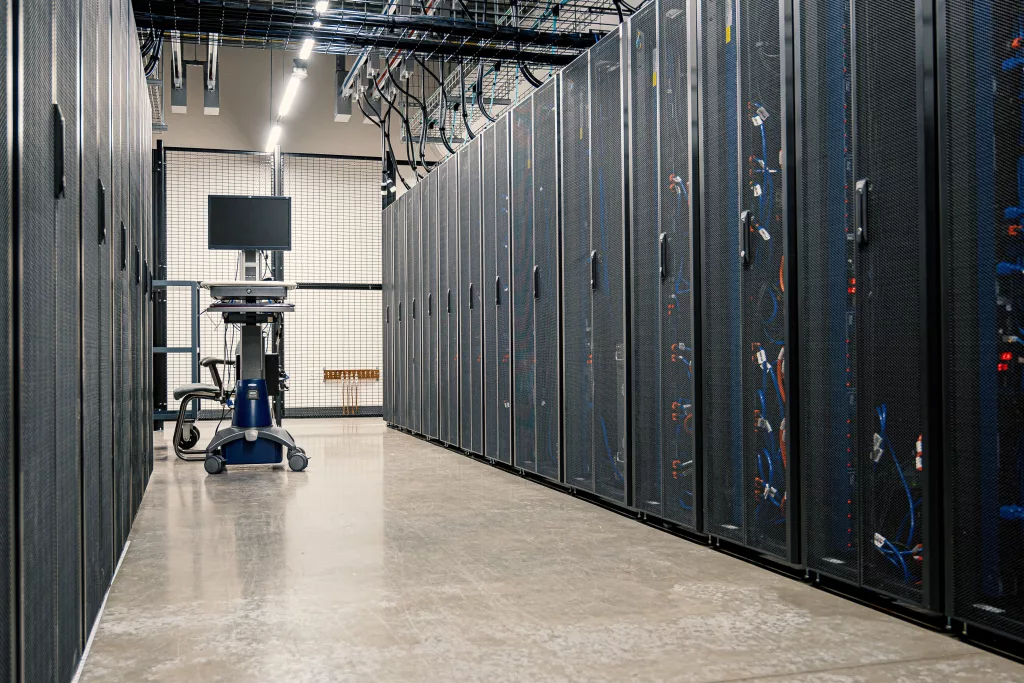
mainframe to cloud AI migration with data center infrastructure
Step 5: Measure whether modernization created value
Set baseline measures before migration and compare them after each release.
Track:
- Deployment lead time
- Release frequency
- Defect rate and test coverage
- Application response time
- Cloud operating cost
- Engineering effort per release
- Failed deployments and rollback rates
- Retired applications and technical debt
These measures reveal whether modernization improves delivery, reliability, and economics. They also show when further technical change produces too little additional value.
Frequently Asked Questions
Can AI automatically modernize a legacy application?
No. AI can accelerate analysis and engineering work, but it should not make every modernization decision. Business value, dependencies, security, and migration risk still require human judgment.
When should a business refactor instead of replatform?
Choose refactoring when the existing design limits performance, maintainability, or future change. Replatforming fits applications where smaller platform changes can deliver enough value.
Does legacy system modernization with AI reduce migration risk?
It can improve visibility into code and dependencies, but it does not remove migration risk. Teams still need staged releases, testing, security controls, and rollback plans.
How should modernization ROI be measured?
Compare post-migration results against a clear pre-migration baseline. Useful measures include release speed, defects, operating cost, engineering effort, performance, and retired technical debt.
Modernize with Evidence, Not Guesswork
Legacy system modernization with AI should make modernization decisions clearer, not simply faster. At CMC APAC, we connect AIX-DX Consultancy with Cloud Services to assess workloads and plan controlled migration. As part of CMC Corporation, we are backed by CMC’s C.OpenAI open ecosystem and 25 core technologies.
For cloud programs, Gartner listed CMC as a Top Vendor in its 2024 Market Guide for Public Cloud Managed and Professional Services, Asia/Pacific. Gartner also recognized CMC in the 2025 Magic Quadrant – Asia Pacific Context: Public Cloud IT Transformation Services. Partnerships with SAP, Salesforce, and Automation Anywhere broaden the technologies available to clients. CMC Global’s Bronze Stevie® at the 2025 Asia-Pacific Stevie Awards also recognized the AIX-DX Consulting Model in Innovation in Digital Transformation – Computer Industries.
If you need to decide what to move, change, keep, or retire, we can help define a controlled modernization path. Explore our CMC APAC Cloud Enablement Services to plan the next step.