
According to IDC’s 2026 AI MaturityScape Benchmark, only 3.1% of organizations have reached its optimized AI maturity stage. Computer vision development services face the same execution challenge when a promising model must become a dependable production system.
Production requires representative visual data, reliable integration, clear governance, and measurable operating targets. This article explains when custom vision is justified and how to move video analytics AI from pilot to production.
What Computer Vision Development Services Actually Cover
Computer vision development services cover the full path from visual data to a working enterprise application. That path includes data preparation, model training, validation, deployment, integration, monitoring, and ongoing improvement.
Common use cases include optical character recognition (OCR), eKYC, object detection, visual inspection, security monitoring, and automated video analysis. CMC APAC’s Computer Vision capabilities include visual-data applications such as smart extraction and vehicle detection.
An accurate detection has limited value if employees still need to review every event manually. A strong computer vision development services engagement therefore defines how model outputs trigger alerts, workflows, dashboards, or system actions.
When Custom Computer Vision Software Is the Better Fit
Pre-built tools handle common visual tasks through predefined models and standard configuration options. Custom computer vision software is designed around specific operating conditions, business events, data sources, and performance requirements.
| Decision factor | Pre-built capability | Custom computer vision software |
| Visual environment | Standard conditions | Business-specific conditions |
| Model behavior | Fixed or configurable | Trained for defined use cases |
| Integration | Standard connectors | Connected to enterprise workflows |
| Data control | Platform-dependent | Designed around governance needs |
| Best fit | Common visual tasks | Complex or differentiated processes |
Customization matters when camera angles, lighting, object variation, or latency affect model performance. Video analytics AI may also require different rules across production lines, warehouses, branches, or security zones.
In McKinsey’s 2026 operational AI analysis, a manufacturing site used AI-enabled vision within a broader production program. Defect rates fell by more than 30%, while overall equipment effectiveness rose 17% and labor productivity increased 27%.
Those outcomes came from several coordinated AI and operating changes, not vision alone. The example shows why visual AI should connect to wider process improvement and measurable operating targets.
A 4-Step Path from Computer Vision Pilot to Production
The goal of computer vision development services is not simply to maximize model accuracy. The system must perform reliably inside the environment where people will use its outputs.
Step 1 — Define the Business Outcome and Measurable KPIs
Start with the event the system must detect and the action that should follow. Then set measurable thresholds before selecting a model.
Useful measures include precision, recall, false-positive rate, inference latency, inspection time, and manual-review reduction. Precision shows how many flagged events are correct. Recall shows how many real events the model finds.
These measures keep teams focused on operational value rather than one technical score.
Step 2 — Prepare Representative Visual Data
Training data must reflect real operating conditions. Include varied lighting, camera positions, object types, rare events, and poor-quality images when those conditions occur.
Teams should also define annotation rules before labeling begins. Consistent labels reduce ambiguity and make validation more reliable.
Privacy controls matter when images contain faces, identity documents, license plates, or other personal information. Teams should define access and retention rules during design.
Step 3 — Build and Validate the Video Analytics AI Model
Model validation should use business thresholds rather than one headline accuracy score. Teams must examine false positives, missed events, confidence levels, and performance across different operating conditions.
For video analytics AI, testing should also cover frame rates, camera quality, network conditions, and event frequency. Continuous video can expose issues that short test clips do not reveal.
Human review should remain available for high-impact decisions or uncertain detections. This creates a clear exception process while teams improve the model.
Step 4 — Integrate, Deploy, and Monitor the System
Deployment choices affect speed, security, and infrastructure requirements. Edge inference runs the model near the camera, while cloud inference processes visual data in remote infrastructure.
The final design should connect model outputs to APIs, dashboards, alerts, or enterprise applications. Effective computer vision development services also define monitoring, retraining, and ownership after launch.
At CMC APAC, our AI services draw on CMC’s 200+ AI talent, including Computer Vision Engineers and Data Scientists. CMC also holds 500+ AI certifications across AWS, Azure, Google Cloud, and NVIDIA.
Frequently Asked Questions
What is the difference between computer vision software and video analytics AI?
Computer vision software analyzes visual information from images or video. Video analytics AI focuses on continuous video streams and detects objects, events, movements, or patterns. Its outputs can then trigger alerts or business workflows.
When should an enterprise choose custom computer vision software?
Custom development fits use cases where standard tools cannot meet specific accuracy, integration, latency, or governance requirements. It also helps when visual conditions vary across operating environments. The investment should still connect to measurable business outcomes.
What should an enterprise evaluate in computer vision development services?
Enterprises should assess visual-data experience, deployment skills, security controls, integration capability, and model monitoring. A computer vision development partner should define measurable KPIs before development begins. Teams should also clarify data ownership, retraining, and post-launch responsibilities.
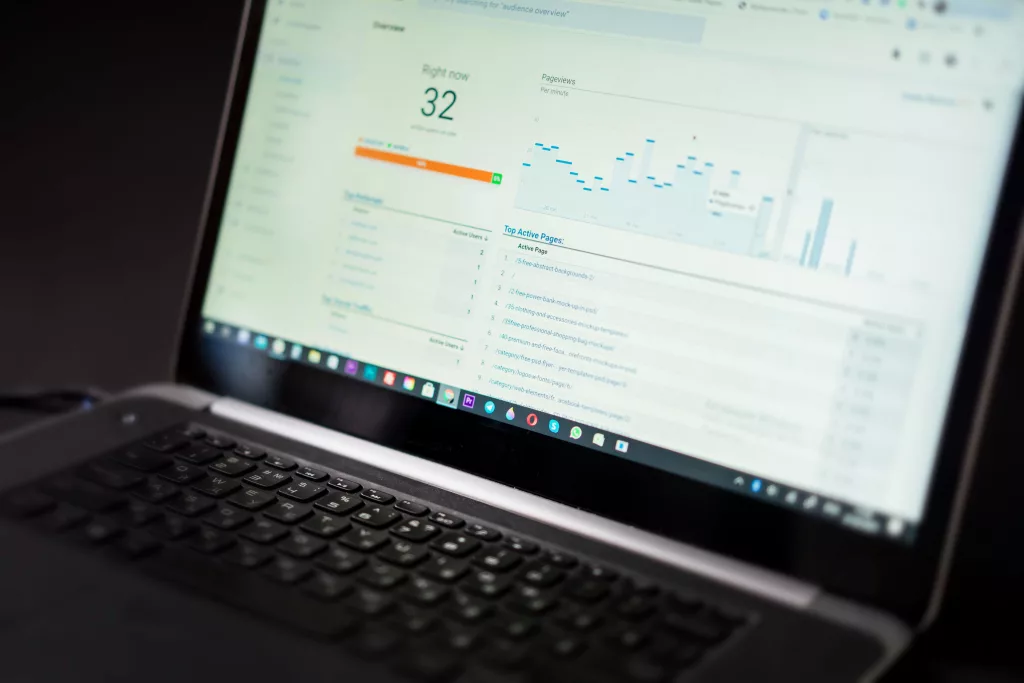
Production computer vision model monitoring accuracy and operational performance
Production-Ready Computer Vision Starts with the Right Delivery Approach
At CMC APAC, our computer vision development services connect enterprise deployment with CMC Corporation’s AI-X strategy and C.OpenAI open ecosystem. C.OpenAI covers 25 core technologies, while CMC facial recognition technology ranked 12th globally in NIST evaluation.
Trust also depends on the technology environment around deployment. CMC partners with global technology leaders, including SAP, Salesforce, and Automation Anywhere. CMC was also named a Bronze Stevie® Winner at the 2025 Asia-Pacific Stevie Awards for the AIX-DX Consulting Model.
To validate your Computer Vision use case, define the visual data, operating constraints, and target KPIs first. Then discuss your use case with our AI team to map the requirements to a production-ready delivery plan.