Microsoft’s 2025 Work Trend Index found that 56% of Singapore leaders already use agents to fully automate workstreams or business processes.
AI agents for business automation can extend this progress when work crosses applications or involves frequent exceptions. Unlike fixed workflow automation, agents can interpret context, select approved tools, and complete several actions toward one defined goal.
This article explains where agents fit, how to deploy them, and which controls and metrics support measurable value.
AI Agents for Business Automation vs Workflow Automation
AI agents handle changing inputs and multi-step work, while workflow automation follows predetermined rules.
What AI Agents Do
AI agents are software systems that interpret goals, plan actions, and use approved tools across connected applications.
Large language models (LLMs) help an agent understand documents, messages, and changing business conditions. Application programming interfaces (APIs) let it retrieve data, update records, or trigger approved actions.
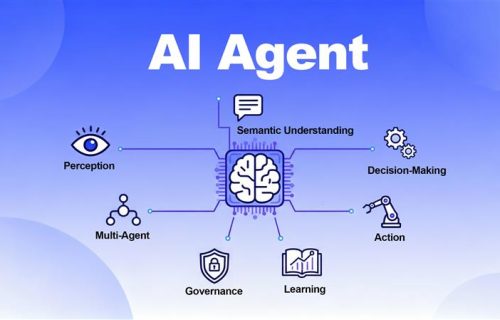
An agent differs from a chatbot because it can complete multi-step work, not only answer questions. Human approval remains essential for sensitive or irreversible decisions.
CMC APAC defines AI Agent Building as task-specific agents with tool integration and business workflow execution. Agentic Automation extends this approach across end-to-end processes using LLMs, APIs, and business rules.
Where Rule-Based Workflow Automation Stops
Rule-based tools perform well when inputs and outcomes remain predictable. Common examples include form routing, notifications, scheduled reports, and standard approval chains.
Problems arise when workflows receive incomplete documents, changing requests, or unexpected exceptions. Teams must then review data, switch applications, and restart stalled processes manually.
| Decision factor | Rule-based automation | AI agents |
| Process type | Stable and predictable | Variable and context-dependent |
| Input data | Defined fields | Documents, messages, and records |
| Exceptions | Predetermined branches | Context-based assessment |
| Application access | Fixed integrations | Approved tools and APIs |
| Human involvement | Manual escalation | Configured approval gates |
| Best fit | Forms and alerts | Cross-system, multi-step work |
AI agents for business automation add value when a process requires interpretation, coordination, or flexible exception handling.
Agentic AI Services: A Five-Step Business Automation Blueprint
A controlled deployment of AI agents for business automation should follow five stages: Assess, Connect, Govern, Pilot, and Measure.
Step 1: Assess High-Value Business Workflows
Select a high-volume process with repeated delays and manual handoffs. Record its current cycle time, error rate, cost, inputs, owners, and expected output.
Avoid broad goals such as “automate operations.” Choose one process with a clear business impact and controlled risk.
Step 2: Connect Data and Business Applications
List every application, document source, API, and permission the agent needs. Remove unnecessary access before development begins.
Check data quality and ownership early. An agent cannot make reliable decisions when records are incomplete, duplicated, or outdated.
Step 3: Govern Agent Actions and Human Approvals
Define which actions the agent may complete independently. Require human review for payments, legal commitments, compliance decisions, and sensitive account changes.
Log each data request, tool call, action, and approval. These records support audits, incident reviews, and continuous improvement.
Step 4: Pilot One Measurable Workflow
Test one contained process before expanding to other departments. Cover normal cases, exceptions, failed integrations, user escalation, and approval requirements.
Measure process results against the original baseline. User feedback should reveal whether the agent reduces work or creates extra review.
Step 5: Measure Results and Expand Proven Workflows
Track automation rate, cycle time, error reduction, transaction cost, user adoption, and payback. Expand only when results and risk controls meet agreed targets.
CMC APAC supports production-ready AI pilots in four to six weeks. Its approved AI Services evidence also records up to 30% shorter deployment time.
Learn more about CMC APAC’s AI services.
AI Agents for Business Automation Outcomes and Controls
The strongest use cases combine repeated work, changing information, and measurable business impact.
| Function | Agent use case | Primary KPI |
| Finance | Validate invoices and route exceptions | Processing time |
| Procurement | Review requests and prepare approvals | Approval cycle |
| Client service | Classify cases and prepare responses | Handling time |
| Supply chain | Monitor shipment exceptions | Response time |
| IT operations | Triage incidents and suggest actions | Resolution time |
Leaders should measure business results rather than model accuracy alone. A technically accurate agent may still fail when employees avoid it or integrations create delays.
CMC APAC’s general AI Services figures include automation of up to 70% of routine tasks. This is an achieved service outcome, not a guaranteed result for every process.
Controls matter because greater autonomy creates a wider risk surface. McKinsey’s report, “State of AI Trust in 2026: Shifting to the Agentic Era”, found that 74% of respondents view inaccuracy as highly relevant. Another 72% identify cybersecurity as a major AI risk.
Agentic AI applications should use role-based access, approved tool lists, output validation, audit logs, and rollback procedures. High-impact actions should always include an approval gate.
CMC APAC also supports private LLM hosting and on-premises deployment. Its security credentials include ISO 27001:2022 and SOC 2 Type II.
Workflow Automation and AI Agent FAQ
How do AI agents differ from rule-based tools?
AI agents assess context and choose approved actions, while rule-based tools follow predetermined paths.
Rules remain suitable for predictable processes. Agents fit work involving documents, changing inputs, and frequent exceptions.
How are AI agents different from robotic process automation?
Robotic process automation repeats defined interface actions, while agents interpret information and coordinate several tools.
The two approaches can work together. An agent may select the next action before an RPA bot completes it.
Which process should a business automate first?
Start with a high-volume process that has measurable delays and controlled business risk.
Set baseline metrics before development. Avoid processes with unreliable data or unclear ownership.
Do AI agents need human approval?
Sensitive or irreversible actions should require human approval.
Approval gates reduce risk while teams validate accuracy. They also clarify accountability when an exception occurs.
How should a business measure ROI?
Measure time saved, automation rate, error reduction, transaction cost, adoption, and payback.
Compare results with the original process. Model accuracy alone does not prove business value.
AI Agents for Business Automation: Start with a Measurable Pilot
The best starting point is one process with clear delays, stable ownership, and measurable outcomes. Strong data, limited permissions, and human review reduce deployment risk.
CMC APAC’s Agentic AI services can help define and test one priority workflow. Request an AI agent opportunity assessment to establish the pilot scope and success metrics.