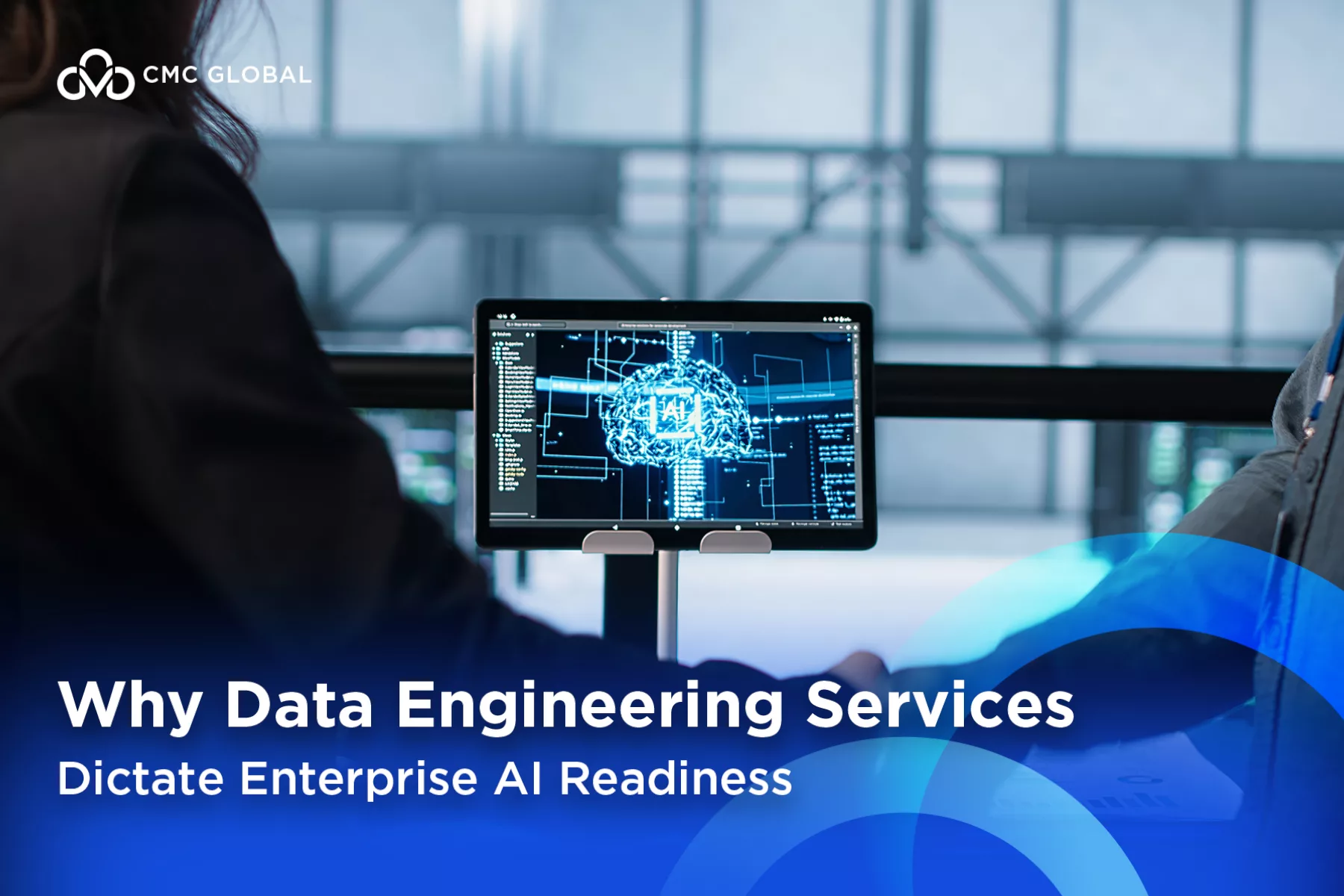
Enterprise AI readiness depends on structured data engineering services that turn chaotic raw information into clean analytical pipelines. Specialized data engineering services provide the technical structure required to transform fragmented databases into secure production-ready platforms. Centralizing operations through robust system design establishes the foundational governance necessary to minimize workloads, eliminate legacy silos, and guarantee predictable business automation outcomes.
What is Data Engineering Services for Enterprise AI Readiness?
Data engineering services for enterprise AI readiness represent the systematic transition from legacy applications to a centralized single source of truth. This approach replaces fragile extraction scripts with high-volume streaming data pipelines. These automated pipelines guarantee continuous data quality across all regional business units. By deploying specialized data engineering services, large companies can eliminate technical debt and combine historical and real-time data seamlessly.
Implementing advanced data systems also allows enterprises to utilize modern on-premise lakehouse designs to protect sensitive corporate data. Combining the speed of real-time streaming with strict access control enables companies to run private Large Language Models securely. This structural modernization optimizes your infrastructure footprint. Consequently, comprehensive data engineering services accelerate model training cycles while reducing data storage expenses.
Why Data Fragmentation Weakens Enterprise AI Readiness
Enterprise digital transformation projects slow down because historical records sit trapped inside disconnected applications and untracked network shares. Siloed system structures prevent real-time correlation between production floor metrics and boardroom financial reporting. Every delayed integration becomes a competitive liability. This structural fragmentation blocks modern software applications from retrieving the continuous context required for automated machine learning reasoning.

Furthermore, relying on older applications that depend on fragile batch-based pipelines introduces massive time-to-insight latency for technical decision-makers. Processing millions of transaction records through manual processes overburdens database engines. This friction leads to severe query performance bottlenecks. When information updates lag by days, deploying responsive customer service agents or autonomous predictive models becomes impossible.
Three Actionable Steps to Modernize Data Infrastructure
Step 1: Establish a Centralized Single Source of Truth
To support intelligent applications, companies must first unify operational, financial, and customer data into a secure on-premise lakehouse environment. Engineers utilize tools like Apache Spark to consolidate fragmented databases, spreadsheets, and file servers into structured Curated zones. In a documented manufacturing engagement, CMC APAC consolidated decentralized sources into a secure repository. This engineering delivery successfully reduced internal reporting cycles from days to hours, ensuring trusted and reliable decision support.
Step 2: Transition from Fragile Pipelines to Streamed Data
Organizations must replace manual Excel-driven processing with automated data pipelines engineered for live ingestion and immediate query execution. Implementing Apache Kafka ensures continuous streaming from transaction systems directly into the analytical environment without causing operational downtime. This automation layer handles high-volume computation dynamically. Proven data engineering services allow managers to maintain near real-time KPI and SLA monitoring.
Step 3: Enforce Automated Validation and Access Controls
The final requirement involves deploying centralized data governance to guarantee data lineage tracking and strict privacy compliance. Integrating schema-defined validation prevents corrupt metrics from contaminating downstream model training environments, ensuring total process reliability. Organizations must enforce strict zero-trust API middleware to guarantee full traceability. Our dedicated data engineering services taskforce keeps enterprise systems completely audit-ready for regional regulatory bodies.
Frequently Asked Questions About Data Infrastructure
Q: Should our enterprise choose ETL or ELT pipelines for AI workloads?
A: Modern AI infrastructure heavily favors ELT (Extract, Load, Transform) over traditional ETL workflows. ELT allows organizations to load high-volume raw data directly into an on-premise lakehouse using Apache Spark. This practice preserves raw historical context for machine learning models. Transformations are then executed dynamically using modern tools like Databricks or dbt, reducing pipeline dependency failures.
Q: How does a modern lakehouse architecture compare to a traditional data warehouse?
A: Traditional data warehouses excel at structured SQL reporting but fail to handle the unstructured data required for Generative AI. A lakehouse structure combines the data management features of a warehouse with the low-cost storage of a data lake. This unified system supports real-time streaming pipelines, centralized data governance, and direct machine learning model execution on a single secure platform.
Q: When should an enterprise leverage external data engineering services?
A: Organizations should engage specialized services when facing local engineering talent shortages or high legacy system integration complexity. Partnering with a global IT provider helps accelerate deployment timelines. For instance, experienced teams can deliver production-ready data pilots in 4 to 6 weeks while optimizing total operational infrastructure costs.
Partner with CMC APAC for Secure Infrastructure Modernization
Resolving structural data fragmentation is a mandatory operational requirement before your business can generate measurable ROI from AI initiatives. CMC is recognized in the Gartner 2024 Market Guide for Public Cloud Managed & Professional Services, Asia/Pacific as a Top Vendor. Our multi-cloud engineering team brings the institutional depth of a technology group with a 33-year heritage to secure your infrastructure.
Building sustainable enterprise intelligence requires modernizing legacy applications into secure, high-performance streaming environments. Partnering with our technical practitioners guarantees your organization maintains complete data sovereignty through certified ISO 27001 and SOC 2 Type II operations. To eliminate technical debt and prepare your infrastructure for intelligent automation, visit our dedicated (data services page) to request a comprehensive readiness assessment from our team.