Deloitte’s 2026 enterprise AI infrastructure survey found that 36% of 515 US decision-makers had scaled AI at the edge. By 2028, 72% expect to reach that milestone, showing why Edge AI development services are moving into enterprise planning.
Running inference near the data source can support faster decisions, local processing, and applications with limited connectivity. This article explains what production-ready Edge AI requires, where projects become difficult, and how to evaluate an engineering partner.
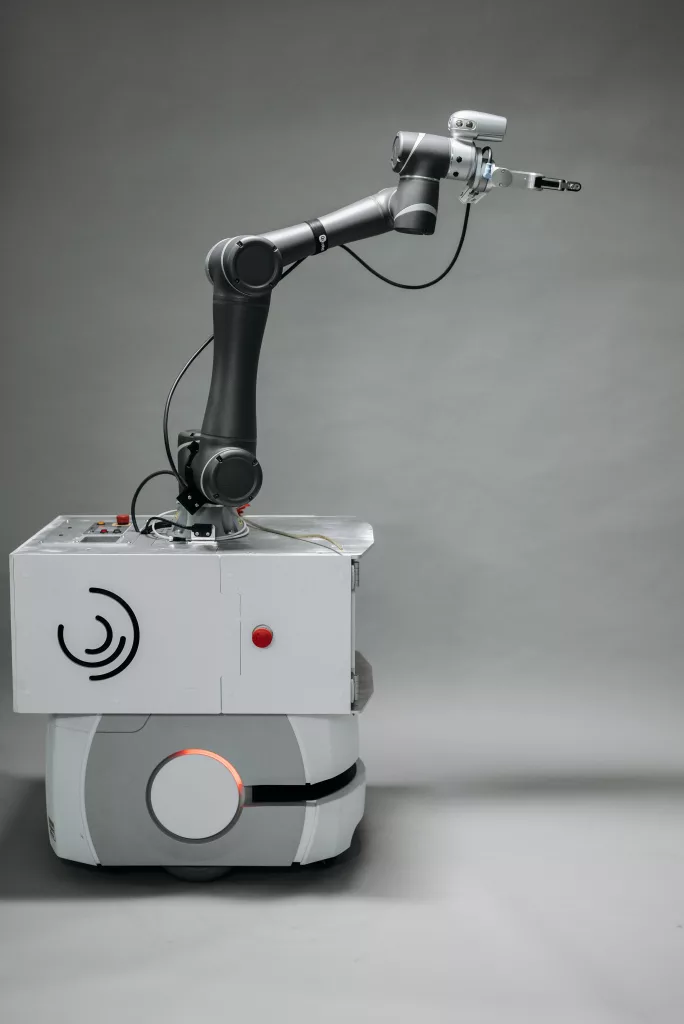
Edge AI development services processing data on connected enterprise devices
What Edge AI Development Services Actually Cover
Edge AI development services connect AI models with the devices, software, security controls, and management processes required for production. Inference means using a trained AI model to make predictions from new data.
Teams first decide where inference should run. They then match the workload with available CPUs, GPUs, neural processing units, memory, power limits, and connectivity.
From AI models to on-device inference
Production teams often optimize models before deployment. Quantization, for example, reduces numerical precision to lower memory and compute demand.
Common use cases include visual inspection, video analytics, equipment monitoring, anomaly detection, and local voice processing. Teams must balance model accuracy with response time, device capacity, and energy use.
Embedded AI software development beyond the model
Embedded AI software development connects the model with operating systems, firmware, sensors, cameras, APIs, and surrounding applications. Engineers must also define how devices exchange data with cloud or enterprise systems.
Production designs need telemetry, remote updates, access controls, failure handling, and model monitoring. Without these elements, a successful prototype can become difficult to operate across a large device fleet.
Why Edge AI Projects Become Harder in Production
Moving inference closer to devices reduces some cloud dependencies but introduces stricter hardware and operating limits. Effective Edge AI development services must balance latency, accuracy, compute capacity, power use, privacy, and maintainability.
McKinsey’s 2025 article The rise of edge AI in automotive reports several production trade-offs from a 2024 survey of roughly 50 Western automotive stakeholders. Thirty-five percent cited reduced latency as a key requirement, while 20% raised data privacy and security concerns. The same analysis found cloud voice-assistance latency of 1,000–2,200 milliseconds, versus 300–700 milliseconds for edge deployment. This evidence is automotive-specific, but it shows how workload placement can materially affect response time.
The right deployment model depends on the application:
| Deployment model | Best fit | Main consideration |
| Edge | Fast local decisions, limited connectivity, sensitive device data | Hardware and power limits |
| Cloud | Large models, centralized processing, frequent experimentation | Network dependency and data transfer |
| Hybrid | Local response with centralized training, analytics, or management | Integration and lifecycle complexity |
A manufacturing camera may need immediate local defect detection, while a forecasting workload may remain better suited to cloud infrastructure. Hybrid designs can handle time-sensitive inference locally while cloud systems support training, fleet analytics, and centralized updates.
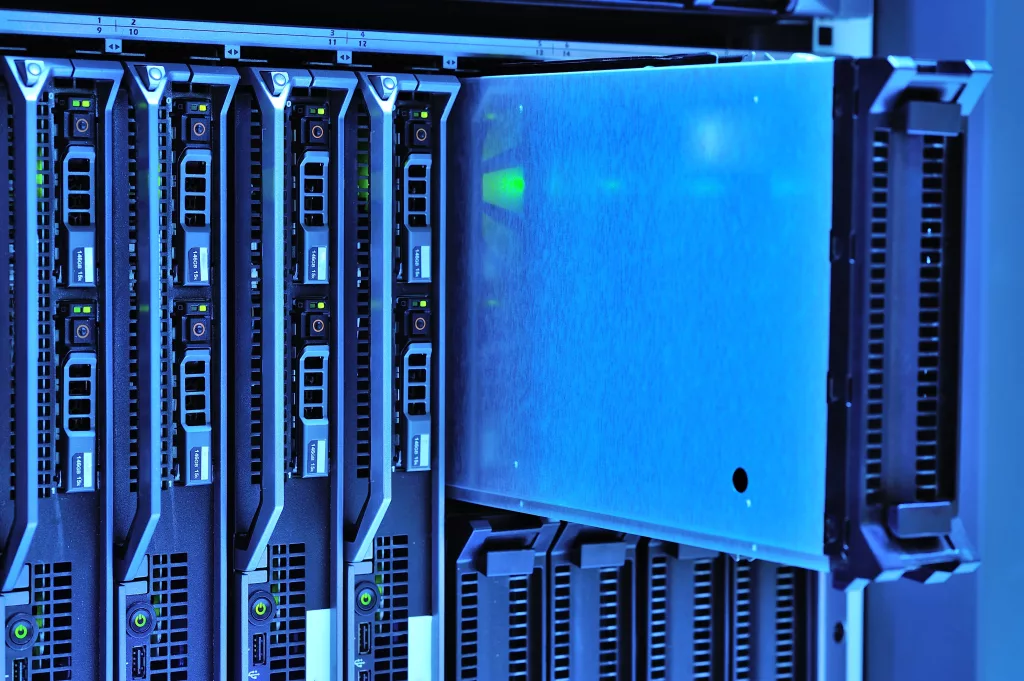
Edge AI development services comparing edge cloud and hybrid inference models
How to Evaluate an Edge AI Application Development Company
Choosing an edge AI application development company requires more than reviewing machine learning credentials. Enterprises should assess whether the team can move from model development to dependable device operations.
-
Check AI and embedded engineering depth
Look for experience across machine learning, computer vision, embedded software, device integration, and data engineering. These disciplines must work together during production deployment.
-
Assess hardware and runtime flexibility
The team should evaluate CPUs, GPUs, NPUs, operating systems, and model runtimes against each workload. Hardware selection should follow application requirements, not a fixed platform preference.
-
Review security and edge-cloud integration
Production devices need secure communication, access controls, protected data flows, and reliable update mechanisms. Teams must define which data stays local and which data moves upstream.
-
Require measurable production KPIs
Track more than model accuracy. Useful measures include inference latency, memory footprint, energy use, uptime, update success rates, and deployment time.
-
Evaluate deployment and lifecycle support
Models change as data patterns, operating conditions, and business requirements change. Teams need clear processes for monitoring, testing, updating, and safely rolling back models.
Across CMC, AI capability includes 200+ professionals and 500+ certifications across AWS, Azure, GCP, and NVIDIA. These capabilities support our broader AI services portfolio for APAC enterprises.

Edge AI application development company testing AI models on enterprise edge hardware
Frequently Asked Questions
What are Edge AI development services?
Edge AI development services cover the engineering needed to run AI inference on or near connected devices. They can include model optimization, device integration, security, monitoring, cloud connectivity, and lifecycle management.
What does embedded AI software development include?
Embedded AI software development integrates AI models with device hardware and surrounding software. It may cover sensors, operating systems, runtimes, APIs, telemetry, updates, and enterprise-system integration.
When should a business use Edge AI instead of cloud inference?
Edge AI fits applications that need low latency, offline operation, local data control, or reduced network dependence. Cloud inference fits workloads that need larger compute capacity or frequent model experimentation.
Many enterprises use both. Security requirements, device limits, connectivity, performance, and operating economics should determine the design.
What should you look for in an edge AI application development company?
Look for combined AI, embedded engineering, security, and integration capability. The team should also define measurable production KPIs and a clear process for managing deployed devices.
Production-Ready Edge AI Requires More Than a Trained Model
Production Edge AI development services require disciplined engineering across devices, data, security, monitoring, and the edge-cloud boundary. As part of CMC Corporation, we bring CMC’s C.OpenAI open ecosystem, spanning 25 core technologies, to APAC engagements. CMC’s facial recognition technology ranked 12th globally in a NIST evaluation.
That technology depth is reinforced by CMC’s partnerships with global technology leaders, including SAP, Salesforce, and Automation Anywhere. CMC Global’s Bronze Stevie® recognition at the 2025 Asia-Pacific Stevie Awards further demonstrates third-party recognition of the AIX-DX Consulting Model.
To determine whether edge, cloud, or hybrid deployment fits your workload, start with a focused Edge AI feasibility assessment. Contact our AI team to review device constraints, integration needs, security requirements, and production KPIs.